Showing posts with label Toyota. Show all posts

Wednesday, June 29, 2011

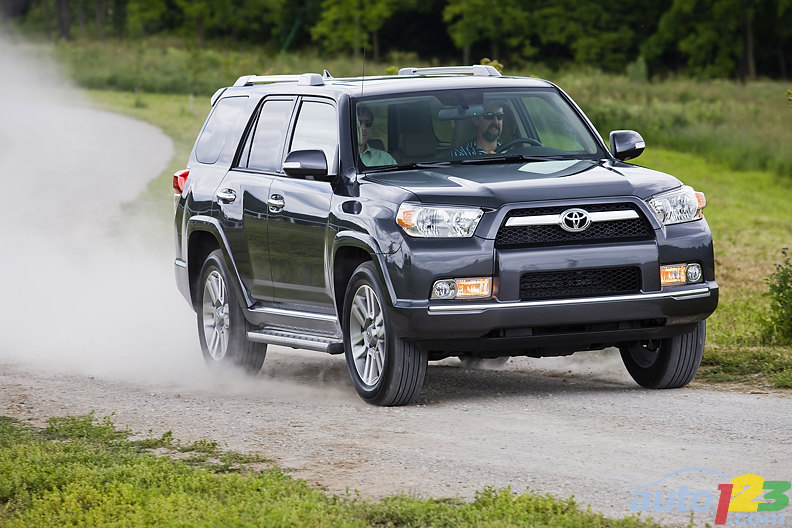
2012 Toyota 4Runner Review


The 2012 Toyota 4Runner SUV is best for you if you faithfully reproduce fading body-on-frame SUVs and want the best one.
The 2012 Toyota 4Runner is equipped with four side doors and tailgate are only equipped for all types of media to display the rear window of the SUV off and will continue to fall roughly in the middle SUV. About 50 percent of SUVs have an average capacity of more than five passengers and 2012 Toyota 4 Runner will be among them. It has two front seats, three folding bench in the second row and optional third-row folding seats in the most appropriate size for children.


The 2012 Toyota 4Runner is not appropriate to get a big change compared with the 2011 Toyota 4Runner. It will remain a high-rise wagon with seating for seven and a skill set that runs from off-road on-road crawl for pampering. It's frankly better in the former, and unless you regularly continue driving after the pavement runs out, light-duty crossover may be a better bet in an everyday SUV.

2012 Toyota 4Runner or buy a 2011 Toyota 4Runner SUV is all-new for model year 2010; not changed much for model-year 2011, and it's a little too early in the lifecycle to expect significant changes for model year 2012. So there seems little reason to wait 4Runner 2012. The 2011 4Runner has a brake override Toyota began installing the system after a sudden acceleration-remember safety. 4Runner 2011 Toyota will also launch while still offering cash incentives tempting as part of a campaign-remember safety recovery. Styling of the 2012 4Runner, meanwhile, could have a relatively short shelf life before a small refreshing expected around model year 2013.

2012 Toyota 4Runner interior design should continue to be the character of the street, with lumps and reflects the large buttons. SUVs offer a high drive inside or outside of duty. After 4Runner cabin boat is quite easy when you sit in the first two lines, especially if you order leather seats and the development of many facilities. Expected for 2012 Toyota 4Runner lineup for the return of three models. The basic version is likely to continue SR5 record. 2012 4Runner Road to the visual models are distinguished by front and rear bumper contours for easy off-road obstacles. Stay on top of the line in 2012 Toyota 4Runner Limited model with chrome bar keeper wheels 17 and 20 inch models. See also: 2012 Toyota Camry.

2012 Toyota 4Runner interior design should continue to be the character of the street, with lumps and reflects the large buttons. SUVs offer a high drive inside or outside of duty. After 4Runner cabin boat is quite easy when you sit in the first two lines, especially if you order leather seats and the development of many facilities. Expected for 2012 Toyota 4Runner lineup for the return of three models. The basic version is likely to continue SR5 record. 2012 4Runner Road to the visual models are distinguished by front and rear bumper contours for easy off-road obstacles. Stay on top of the line in 2012 Toyota 4Runner Limited model with chrome bar keeper wheels 17 and 20 inch models. See also: 2012 Toyota Camry.

The 2012 Toyota 4Runner is equipped with a 4.0-liter V-6 and five-speed automatic transmission as a single drive train. Hoping to have up to 270 horsepower and 278 pounds-ft of torque. 4Runner V-6 provides a better life, but not forgotten in the past slower traffic with the authorities or less, is charged with 4.500 to 4.900 pounds of body-frame SUV. Tow rating is expected to continue for 2012 Toyota 4Runner, which averaged 5000 or more. 2012 Toyota 4Runner V-8 key features of an enemy with a minimum of 388 lb-ft of torque for better acceleration and better towing performance in all directions.

Wait for the 2012 Toyota 4Runner road manners to keep making concessions to the traditional design of his SUV. 2012 Toyota 4Runner SR5 model and the road has a few basic 4WD system, where the driver pull the floor lever to engage the front wheels. Part-time 4WD only for the use of off-road or slippery conditions. Regardless of the system to invite all 2012 Toyota 4Runner 4WD again thank you for the real off-road to separate low-range gearbox and Toyota's Active Traction Control (A-TRAC) system.2012 Toyota 4Runner specifications, capabilities, functions and images

The all new 2012 Toyota 4Runner with four-wheel disc brakes and ABS anti-lock system, traction and result in better control of the bus stop, take-offs and bends. Front passenger knee airbags otherwise acquire, and three rows of seats is to get curtain airbags protect the head from the side. Toyota rose stolen vehicles, automatic collision notification and location Reconnect with subscription services. Do you expect to keep all 2012 Toyota 4Runner into tank skid plate. See also: 2010 Toyota Highlander Review.

2012 Toyota 4 Runner Price

The best price for the Toyota 4Runner starting from $ 31,000 - $ 41.500, and 2012 Toyota 4Runner SR5 is $ 31,000 with 2WD and $ 33,000 with 4wd. And 2012 Toyota 4 Runner Trail has some of the price of $ 37,000, and the latest 2012 Toyota 4Runner Limited is $ 39,000 with 2WD and $ 41.500 with 4wd.

Tuesday, June 28, 2011

2011 Toyota 4Runner Overview and Price


2011 Toyota 4Runner was essentially a compact pickup truck with five-passenger seating and a permanent bed shell. My, how times have changed. When it was first introduced in the 1980s. While the 4Runner remains a body-on-frame based SUV, it has evolved considerably, and it now competes against a sea of on-road biased, car-based crossovers.

All-new 2011 Toyota 4Runner is longer, wider, and taller than before, and supported by both the engine 2.7-liter four-cylinder engine mated to a four-speed automatic (available for rear-drive models only), or 270 horsepower Toyota, 4.0 -liter V-6 and five-speed automatic combination. Instead of getting softer, the new 4Runner play in its uniqueness and strength, with Toyota making it even more off-road capable than ever before.


Toyota has added several cool trail features to the 4Runner, including Crawl Control, a system that controls throttle and brake at low speeds, enabling the driver to better focus on steering inputs. The 4Runner also has an impressive 9.6 inches of ground.

The Range
Body styles: SUV
Engines: 2.7L I-4, 4.0L V-6
Transmissions: 4-speed automatic, 6-speed automatic
Models: SR5, Trail, Limited


What's New
We were hoping for the addition of the company's new 4.6L V-8 as an option, but that hasn't happened. In fact, there are only minor changes for 2011: the sport/utility vehicle receives a new brake override system. In addition, the sliding cargo tray/cargo organizer is a standalone option on two-row Limited models; the cargo organizer is a separate option on Trail models.

Exterior
The new 4Runner is bigger, more rugged-looking, and bolder than before, with a bold, in-your-face style that screams off-road. The 4Runner Trail Edition adds black fender flares, grille, utility roof rack, and the hood received a hood scoop. Seventeen-inc.

Interior
Five-passenger seating is standard for the 4Runner, and room for seven is optional. All 4Runners come standard with an eight-speaker audio system, tailgate party audio, a slide-out cargo tray, and an eight-way adjustable driver's seat with power lumbar su

Performance & Handling
While the 4Runner excels off-road – Toyota tested it at speed in the Baja 1000 and as a slow rock-crawler on the world-famous Rubicon Trail -- it is surprisingly capable on the road as well. While its body-on-frame architecture and live rear axle can make for a bouncy ride, its steering is linear and responsive, and its brakes are responsive and easy to modulate. The 4.0-liter V-6 4Runner reaches 60 mph in 7.8 seconds.

Safety
Driver and front passenger airbags are standard, as are front seat-mounted side airbags, roll-sensing side curtain airbags for all rows, and dual front knee airbags. Stability control, traction control, and ABS with electronic brake-force distribution and brake assist are also standard.

EPA Fuel Economy
SR5: 17-18 mpg city/22-23 mpg highway
Trail: 17 mpg city/22 mpg highway
Limited: 17 mpg city/22-23 mpg highway

Engine                                     MPG Base                         Price
SR5 Sport Utility 4.0L            270hp 17 city, 22 hwy        $30,305
Trail Sport Utility 4.0L            270hp 17 city, 22 hwy        $36,555
Limited Sport Utility 4.0L       270hp 17 city, 22 hwy         $38,400

Thursday, June 16, 2011

2012 Toyota Camry "Best Selling Car In USA"


2012 Toyota Camry is the best car for you if you want an all-new version of the iconic car family. Toyota has marked its presence in almost all types of vehicles and new standards for the recovery of their models to meet the buyer. Toyota Camry Hybrid made ​​a mark for the first time in 1983 and became a successful car. Since the first of 2007 and after the Camry 2011 model, Camry now comes with new design in the 2012 Toyota Camry. New Camry 2012 is ready to take the edge of the competition Ford Fusion, Honda and Hyundai Sonata. 2012 Camry Hybrid is a four-door small car limousine interior is spacious and in a number of options from the base SE model is available, support from the LE and XLE models top models.

The 2012 Toyota Camry Camry will be completely redesigned the first since the 2007 model. It will remain, roomy front-wheel-drive four-door sedan medium but has a new style, extra features, and more efficient machine. Redesigned 2012 model kicks off the seventh generation Camry design, car design parlayed deceive the ordinary into the extraordinary appeal of the width.


Wait a 2012 Camry if you want to progress in features, fuel economy, and security that comes with all new designs. Waiting for 2012 Camry car styling means you will look at several years, and it will be worth more at resale than 2011 out of the Camry. Buy 2011 Camry if you need transportation noise value today and do not place a premium on the latest looks or technology. The 2011 Camry sedan is still a wonderful family. It comes with unintended-acceleration-mitigation Toyota modifications. And benefit from generous factory incentives may not be offered on 2012 models.

To preview the styling of Toyota Camry, 2012, look to the real theme of the Toyota Venza and re-engineered 2011 Toyota Avalon. Venza is Toyota's new era of crossover wagon. Avalon is basically a stretched version of the Camry sedan. Both have roots architectural design of medium-Toyota. Their ensemble-blade horizontal grille and swept back headlamps are very likely a rough preview of the front end of the 2012 Camry. 2012 Camry buttocks should reflect the elements introduced in 2011, which is flanked by Avalon sculpted form large taillamps that wrap into the rear fenders. Look for Camry 2012 for get some trendy "light-pipe" detail front and rear lighting. And hope the body that expands slightly lower the better shows road-hugging stance. Do not anticipate major changes in size four-door sedan or the general silhouette.


2012 Camry may be slightly wider than the outgoing model. But the overall length, it should remain at around mid-pack in the medium-car field. Toyota, however, tend to stretch the wheelbase of the 2012 Camry. Wheelbase is the distance between the front and rear axles and a major factor in how much space you can devote to the automobile passenger compartment 2007-2011-generation Camry to achieve one of the cabins in the segment roomiest despite having one of the shortest wheelbases. Chalk that up inspired packaging. But given the opportunity to redesign the Camry, Toyota will probably make things a little easier on himself with a wheelbase a bit more, and that should translate into still more passenger leg room.

Toyota Camry 2012 will continue to deceive the field may be mechanically unadventurous - at least in terms of horsepower figures striking or cutting-edge design of the suspension. Indeed, talent Camry over-delivers on common specifications are the major reasons for the wide appeal: it has been selling U.S. passenger car for almost every year in the last decade. Camry geared up to achieve an impressive level of improvement. And given the modest aspirations, even the performance is commendable.


2012 Camry will maintain the front-wheel drive, which concentrates the mass of the engine and transmission in the car's nose. It's best to pack efficiently. And by concentrating the weight for a tire that is also pushing a car, aids traction in rain and snow. Front-wheel drive handling balance rarely match the rear wheels. But Camry is the purpose, easy-drive predictable nature. There is no reason to doubt the 2012 Camry will continue to meet that goal, even though Toyota will quiet some critics, if given a new car with more precise steering feel and put a little more muscle in suspension.

Under the hood, expect Toyota Camry to replace the outgoing 169-horsepower 2.5-liter four-cylinder engine with 2.7 liter four was particularly strong in the Venza is available, there is, it is rated at 182 horsepower. Toyota will find it hard to fix the machines available Camry V-6,, plump smooth 3.5-liter continued to serve in a variety of vehicle manufacturers of cars, including some in the luxury Lexus line. Expect V-6 version to get back on Camry 2012 and continues to around 268 horsepower. 2012 Camry four-cylinder may again be offered with a six-speed manual transmission. They will certainly come back with a six-speed automatic, which accounts for the bulk of sales. Expect a six-speed automatic transmission back to being single for the V-6. Possible 2012 Toyota Camry Hybrid is an open question. Combining the four-cylinder gas engine and electric motors powered by on-board self-charging battery system, the Camry Hybrid has been present steady but low-volume throughout the period of the sixth generation.

All 2012 Camry will be equipped with Toyota's latest safety features. These include systems that automatically cut the throttle if the override signal from the brake and accelerator are applied simultaneously. Also in place for 2012 will be the new Toyota Camry Star Safety System. Designed as a comprehensive tool for controlling the vehicle, integrating actions Toyota Vehicle Stability Control (VSC) system to combat anti-slip side slides, anti-lock braking system (ABS) to enhance control in emergency stops, and traction control to reduce wheel spin on take-off.

Expect the 2012 Toyota Camry to proceed with various types of models that are very effective to penetrate almost all the layers of middle-car horizon. Again should begin with the equivalent 2011 model Camry CE, which sometimes refers to Toyota as a "Standard" or "basic" Camry. From there, the list of names 2012 Camry LE trim must ride through the most popular and high-level equivalent XLE today. Although not a big seller, Toyota may be looking to again have the sporty model in the lineup.

This role has been played by Camry SE, which featured increasingly tense suspension tuning and unique trim inside and out and is available with a V-6 or a 179-horsepower version of the 2.5-liter four-cylinder. If a 2012 Camry Hybrid longer part of the lineup basic level of equipment must be placed in between the LE and XLE. Standard features on all 2012 Toyota Camry will include air conditioning, height-adjustable driver's seat, tilt / telescoping steering wheel with audio controls, cruise control, and power windows, locks, and mirrors. Split-folding rear seatbacks also have to go back to increase cargo flexibility, and Toyota could pull the features of the 2011 Avalon and Camry XLE complete with the rear seatbacks are lying to enhance passenger comfort.

Prices for 2012 Toyota Camry will not be announced until shortly before the car will be sold, but the base price range of around $ 20,300 - $ 29,900 is almost guaranteed. That's where most of the medium-car business is conducted and where the Camry has delivered great value. (All prices are basis of this study objectives include the cost of compulsory automobile manufacturer Toyota For 2011, the cost is $ 750 .. The cost can vary for Toyota purchased in the Southeast and Gulf states.)

If the lineup again, including 2012 Camry SE or a sporty model like hoping to start around $ 23,500 in four-cylinder engine / manual transmission form and range to about $ 27,000 with a V-6 and automatic. If the gasoline-electric model no longer part of the lineup, look for 2012 Toyota Camry Hybrid prices start around $ 27,500.

Given the speed of the latest Camry redesigns, expect a seventh-generation Camry has a life cycle that includes six model years, from 2012 until 2016. This will likely receive a refresh for 2015 model year, get the style of small tweaks and updates may be mechanical. Life cycle which of course depends on a variety of conditions beyond the control of Toyota. But Camry is one of the company's signature product and the auto makers may not take the risk of falls is very much fast-moving competition by delaying repairs popular midsize sedan.

Whether the design will include a seventh-generation Camry Solara Toyota model or equivalent is open to conjecture. Solara comes as a two-door coupe or two-door convertible version of the Camry. It was dropped from the lineup after model year 2008 because of slow sales. Among the main rivals, only the Honda Accord and Nissan Altima coupe body style offered in addition to their sedan. There are no direct competitors is available as a convertible.

New Toyota Camry 2011


Toyota Camry 2011 show 17 of 21 midsize car at an affordable price. Selling car in America for eight consecutive years, the Toyota Camry's reputation damaged by a sensational recall Toyota unintended acceleration (see Toyota's recall page for details.) Buyers who are interested in a calmly Camry can be found, a comfortable coach comfortable, but we have seen reports quality problems with the 2011 Toyota Camry.

Americans know exactly what to expect from Toyota Camry for years. The 2011 Toyota Camry has a long list of virtues, but virtues which do not reflect reviewes impressive car. For fans of Toyota, Toyota Camry 2011 May chance to buy great, especially over the Toyota Camry has been deducted from the strong incentives represent the last few months.

Take the 2011 Toyota Camry, for example. Being a huge success, oddly enough, sometimes it can be somewhat unattractive. Camry car enthusiasts prefer to ignore the sarcastic comments that relate to the excitement factor of the washing machine. But the reality is that for every car guy (or gal) is in need of comfort from what they drive, there are hundreds of people who just want their cars to provide transportation is convenient, efficient and reliable. Camry has long excelled in this area, and the result is a midsize sedan Toyota became one of the top-selling car for most of the last quarter century.


Of course there is more than just a bland persona Camry. Camry engine choices including 2.5-liter inline-four polite strong and ultra-smooth 268-horsepower V6 is without question the best in the family sedan segment. Other strong points include Camry commendable level of comfort, a lot of convenience and luxury features, and top-notch safety scores. Whether you use it for daily commuting or family road trips across the country, the Camry is likely to satisfy.

Midsize sedan segment is arguably the most competitive in the automotive market, and thus the 2011 Camry has a number of worthy opponents who must battle for supremacy of the sales charts. Of course there is the age-old rivals, the Honda Accord, but now you can also consider the Chevrolet Malibu, Ford Fusion, Hyundai Sonata, Mazda 6, Nissan Altima and Suzuki Kizashi. Although the 2011 Toyota Camry does not handle nearly as well as a sporty class immigrants - such as 6 and Altima - we suspect most buyers will not be too concerned.


The 2011 Toyota Camry four-door sedan is offered in four trim intermediate levels - basic, LE, SE and XLE. Base Camry comes only with four-cylinder engine, while the other trims offer a choice between four-cylinder and V6.

Camry base features 16-inch steel wheels, air conditioning, auto up / down windows for all four doors, six-speaker CD audio system with an additional input jack, tilt steering wheel-and-telescoping, cruise control, full power accessories and the backseat 60 / 40-split-folding. Camry LE adds keyless entry and eight-way power driver seat.


SE includes sport-tuned suspension, 17-inch alloy wheels and special interior and exterior styling details. The luxurious XLE back into LE soft suspension settings and 16-inch wheels while providing JBL-branded system improved sound with in-dash CD changer and satellite radio, Bluetooth phone connectivity and music, automatic dual-zone climate control, power passenger seat, auto -dimming rearview mirror, rear seat reclining, a moonroof, wood-tone and accent, the V6 model, leather seats. Note that both the SE and XLE offers folding rear seat, though each has a center pass-through.

Most upgrades are offered on the XLE trim levels are lower as options. The other main option, depending on trim level, including sunroof, navigation system, keyless ignition and entry, and heated front seats.

All Camry is a front-wheel drive, and the standard engine on the base, LE and XLE trim levels are 2.5-liter four-cylinder that produces 169 hp. SE receive tweaked version of the same engine good for 179 hp. A six-speed manual transmission is standard on all four cylinders except for the Camry XLE, which comes only with a six-speed automatic. For the rest of the trim, automatic is optional. Estimated fuel economy of 22 mpg city/33 mpg highway and 26 mpg combined with a manual, while highway mileage automatically dropped slightly to 32 mpg.

Optional on all models except the base Camry is a 3.5-liter V6 that cranks out 268 hp and 248 lb-ft of torque. A six-speed automatic is the sole transmission choice. Thus equipped, the Camry can sprint to 60 mph in 6.5 seconds fleet, but still impressive fuel economy mpg at19/28/23.

In the base and LE models, the interior of the Camry is very easy and functional. Toyota's decades of experience in ergonomics shines through here - the main controls are large and logically placed, and the seat width to easily accommodate most body types. There are plenty of storage drawers, too. Ice-blue backlighting for audio and climate controls may seem a bit tacky, but do things turn a bit. SE adds sporty interior styling cues, while the XLE raise the bar with convincing faux wood accents and upscale features not usually seen in this segment - the back seat lying down. Trunk capacity for all models is 15 cubic feet.

In particular, build and materials quality is not up to the high standards set by the previous generation Camry. Some standard plastics, and supplies the panel is not exactly uniform. Camry interior is not bad by any means, but it is no longer above average for this segment.

Wednesday, June 15, 2011

2011 Toyota Venza "Vehicle Controversy"


Toyota Venza, 2009 to enter the market and new models at the same time, controversy. Before practices and functional properties to unite, then the Venza is actually always been a vehicle that has been through this controversy. In 2009, vehicle manufacturers who sell style and comfort combined with the versatility of an SUV. But it is the cross, taking into account their capabilities, size and ground clearance.

The 2011 Toyota Venza looks like a V-6 3.5 liter engine is based, Toyota is offering to supply 268 pounds of torque hp/246-pi. Also available online with a 2.7-liter four-cylinder with lb.-ft. 246 182 hp and torque. Engine is paired with a six-speed automatic transmission engine tranny. It comes with front-wheel or full as well.

Venza sits higher than the Camry, the offer from Toyota, and can tow 3500 pounds. This vehicle combines high performance, comfort and performance, but do not have a specific reason. It is not so bad because the car buyer can customize the site Venza.

Style Council: Crossover SUV Engine: 2.7L I-4 3.5-liter V-6 Transmission: six-speed automatic model: FWD 2.7L, 2.7L AWD, FWD 3.5L, 3.5L 2011 Toyota Venza AWDWhat Newth keep the same team has in 2010. But then Venza Crossover does not have many new pieces of equipment in the last year or - iPod and USB standard, such as Bluetooth connectivity. The Venza is a greater height for better visibility and fuel economy mpg highway and 21 mpg ciudad/29.


Exterior Toyota Venza has a different grille and cargo crossover, but it is clear that the proportion of vehicles in the DNA (and 109.3 in wheelbase) with the Camry sedan. Venza includes 19-inch wheels as standard vehicles with 20-inch wheels optional.

The five-passenger Venza cabin is equipped with dual-zone air conditioning, power windows and locks, and six speakers. Glass sunroof, power seats, leather upholstery, navigation and rear seat DVD entertainment is optional for the Venza.


With the V-6, there are a lot of energy for heavy vehicles. This causes the Venza at 60 mph in 6.5 seconds and a quarter mile in 15 seconds flat out to 93.7 mph. Venza address bit steep, 20-inch wheels make travel more difficult (but still fun), and roll suspension when pressed.

Standard driver and front passenger, driver and front passenger seats in two rows side curtain and driver knee. Also standard on the Toyota Venza increases stability, traction control and ABS with electronic brake-force distribution and brake assist.

EPA Fuel Economy
2.7L FWD: 21 mpg city/29 mpg highway
2.7L AWD: 20 mpg city/28 mpg highway
3.5L FWD: 19 mpg city/26 mpg highway
3.5L AWD: 18 mpg city/25 mpg highway

You'll Like
Beautiful interior
Excellent ergonomics
Generous cargo space
Good fuel economy

You Do not Like
Underpowered four-cylinder
Rough ride with 20-inch wheels
Slightly numb steering

MSRP: $ 26.625 - $ 29.900
Invoice: $ 24.364 - $ 27.209

Thursday, April 28, 2011

New Toyota Matrix 2011


The 2011 Matrix is due a minor styling facelift and its sporty and all-wheel-drive (AWD) models will likely get a new engine. The 2011 Matrix will remain basically a station wagon version of the 2011 Toyota Corolla compact sedan but with the additional benefit of available AWD. Toyota is phasing-in the installation of an electronic brake override designed to thwart sudden acceleration and every model-year 2011 Matrix will have the upgrade. Most 2010 models should have it as well.

Should you wait for the 2011 Toyota Matrix or buy a 2010 Toyota Matrix? Wait for the 2011 Matrix if you want the latest styling tweaks or you’re interested in a bit more power. Neither should be compelling enough, however, to pass up a great deal on a 2010 Matrix if you need a compact wagon now. Toyota’s extending generous cash-back and low-interest incentives as it tries to recover from sales lost during the sudden-acceleration recall. Obviously, verify with your dealer that any 2010 Matrix you’re considering has the brake-override system as well as the modified gas pedal and replacement driver’s-side floormat fitted as part of the recall.


With miles of style and attitude to spare — the 2011 Matrix is ready for whatever, whenever. With its low profile and wide track, Matrix has performance inspired styling backed up by the power beneath the hood.

The S Package—available on both Matrix and Matrix AWD—brings out Matrix's aggressively sporty attitude courtesy of 17" Aluminum Alloy Wheels with Wheel Locks, Sport Grille, Fog Lamps, Power Moonroof, Roof Mounted Spoiler, Chrome Exhaust Tip, Colored Mirrors, and Sport Front & Rear Fascia. The performance inspired XRS is set off by its newly redesigned Front Grille, Fascia and Rear Bumper in combination with Front and Rear Underbody Spoilers, Fog Lamps, 18" Aluminum Alloy Wheels, Scuff Plates, and XRS Badging.


The 2011 Toyota Matrix will likely receive slight modifications to its grille and front fascia, minor changes to its taillamps, and perhaps new wheel designs. . Revisions to passenger-compartment textures and graphics would be welcome, too. Otherwise, this 2011 Toyota will retain the shape and size the second-generation Matrix sported when it debuted as a 2009 mode. 

That means a slightly disheveled collection of arcs and angles on a vehicle that’s taller than the typical compact car but not as long overall. Matrix’s shape translates to great head room and lots of cargo space, though rear-seat knee clearance is modest. Newer arrivals to the category of hard-to-define mobility boxes tend to be less lengthy still, and taller, too. These include the Kia Soul, Nissan Cube, and, from Toyota’s own youth brand, the Scion xB. Matrix’s competitive set, however, is broad enough to include compact four-door hatchbacks like the Mazda 3 and true compact wagons, like the Hyundai Elantra Tourin.

None of these rivals offers AWD, though. Just 10 percent of Matrix buyers choose it over the standard front-wheel-drive, but having AWD available does qualify Matrix as a sensible on-road alternative to bulkier compact SUVs. One competitor the 2011 Matrix won’t have to contend with is the very vehicle more like it than any other: the Pontiac Vibe. A Matrix with different (and nicer-looking) sheet metal, the Vibe has been discontinued along with the Pontiac brand.

Every 2011 Toyota Matrix will have the brake-override system, which is designed to cut engine power if the accelerator and brake pedals are applied simultaneously. Toyota is poised to make some changes beneath the hood of the 2011 Corolla, and since Matrix shares the same selection of four-cylinder engines, it should receive similar treatment. 

The entry-level 2011 Matrix is likely to again be called the Matrix Standard and should carry on with a 132-horsepower 1.8-liter engine rated at 132 horsepower and 128 pound-feet of torque (Think of torque as the force that gets you moving, horsepower as the energy that sustains momentum.) However, the 2011 Toyota Matrix S and sporty 2011 Toyota Matrix XRS models are apt to exchange a 158-horsepower 2.4-liter for a 169-horsepower 2.5-liter. Already used in the midsize Toyota Camry, the 2.5-liter would have only marginally more torque than the 2.4, 167 pound-feet to 162. But the 2.5 is a newer design that should deliver better gas mileage. Fuel economy would further improve if Toyota upgrades the automatic transmission available in the Matrix S and XRS models, from a five-speed to a more efficient six-speed, as in the Camry. 

The automatic used in the 2011 Matrix with the 1.8-liter engine will almost certainly remain a four-speed, for cost-savings. All these models will likely continue with a five-speed manual transmission as standard. They’ll also come with front-wheel drive, which places the weight of the engine over the driven wheels to the benefit of traction in wet conditions. AWD is an alternative exclusive to the Matrix S model. Not intended for off-road use, the system is designed to maximize traction on wet or snowy pavement. It automatically reapportions power to the rear wheels when the fronts begin to slip, then reverts to front-wheel drive when grip is restored. A four-speed automatic has been the only transmission available on AWD Matrix S models. 

Toyota will need to determine if fuel-efficiency gains would offset the added cost of any 2011 Matrix powertrain revisions. But upgrades would help performance, too. Currently, the Standard model can feel slightly underpowered and driving a Matrix really is entertaining only when you combine the XRS with manual transmission. Toyota already enhanced Matrix’s safety equipment for model-year 2010, making an antiskid system – also known as stability control -- standard on every model, not just the XRS.

Toyota will not announce 2011 Matrix prices until shortly before the car goes on sale. But even with a new engine and possible new transmissions, 2011 Matrix prices won’t climb much above model-year 2010 levels. (Base-price estimates in this review take into account the manufacturer’s mandated destination fee. Toyota’s fee for factory-delivered cars was $750 for model-year 2011; Toyotas in some southeastern states are delivered by independent distributors and may carry different destination fees.)

The best-selling model in the 2011 Matrix line should again be the Standard. Estimated base price for the 2011 Toyota Matrix Standard is $17,450 with the five-speed manual transmission and $18,260 with the four-speed automatic.

Expect 2011 Toyota Matrix S pricing to start around $19,500 with manual transmission, $20,700 with automatic. Power windows and locks, remote keyless entry, a household-type power outlet, and a leather-covered steering wheel with audio controls should again be among S-model upgrades over the Matrix Standard. Estimated base price for the Toyota Matrix S AWD is around $21,800.

The 2011 Toyota Matrix XRS prices would start at an estimated $21,840 with manual transmission, $23,100 with automatic. Positioned as the sportiest Matrix, the XRS has included 18-inch tires instead of its stable mates’ 16s or 17s. And the XRS and the AWD S are the only Matrix models with a handling-oriented independent rear suspension instead of a budget-conscious torsion-beam setup.

Returning as key options for the 2011 Matrix should be a Power Package that brings the Standard model close to S-level equipment for around $1,000. Toyota could decide to add cruise control to the 2011 Matrix Standard or S model instead of charging $250 extra as it did for model-year 2010. A power sunroof should continue as an option on all 2011 Matrix models for around $900. The navigation system will probably again be confined to Matrix S and XRS models, where it has been available for about $1,800 and $1,300, respectively.

Mileage estimates for the 2011 Matrix had not been announced in time for this review. But with no expected change in powertrain the 2011 Toyota Matrix Standard’s fuel-economy rating should remain 26/32 mpg city/highway with manual transmission, 25/31 with automatic.

If the 2011 Toyota Matrix S and XRS get the larger engine and it’s coupled to a six-speed automatic transmission instead of a five-speed, expect these models to squeeze out another mile per gallon or two in both city and highway driving compared to their 2010 counterparts, which were rated at 21/29 mpg city/highway. Similarly, an engine and transmission change to the 2011 Matrix S AWD would better its chances of improving the 2010 version’s rating of 20/26 mpg.

Manual transmissions account for a miniscule percentage of Matrix sales but the prospect of improving overall fuel-economy averages could drive Toyota to upgrade from a five-speed manual to a six-speed for the 2011 Matrix S and XRS. That would improve their chances of beating the 2010 versions’ rating of 21/28 mpg.

Monday, April 25, 2011

2011 Toyota Sienna Review


This is the latest generation Toyota Sienna was launched recently. Sienna latest model has a design that was more aggressive in the appeal predecessor, partly designnya has some similarities from the Toyota Venza. The New Toyota Sienna was redesigned for 2011, and observers agree that the minivan is much better than before. No longer stuck behind the Honda Odyssey, the new Sienna
took a former class leader in the dynamics and comfort, while the loss of soft style that marked previous Sienna. Most reviewers say that Sienna 2011 is the best minivan on the market.


Toyota has completely redesigned its popular Sienna family van for the latest model year, complete with four distinct trim levels. One of the most polarizing trim levels for the Sienna is the SE -- a sporty variant of the van, complete with a 265 horsepower, 245 lb-ft of torque 3.5-liter V6.

The base model Sienna, designated as the LE, will list from $24,260, undercutting the current model by $340. Buyers wanting the sportier SE model will have to pony up $30,550 while buyers of the range-topping Limited AWD model with have to shell out $39,770. Pricing does not include destination.


Riding on the same MC platform that underpins the Camry, Prius, RAV4, Venza and Highlander, Toyota is aiming the new Sienna at new families that need more space that a traditional sedan or crossover can provide. Toyota is also hoping that empty-nesters will give the new Sienna consideration for its luxurious and spacious interior.

Designed at Toyota's facilities in southern California, the all-new Sienna takes most of its styling cues from the 2006 F3R concept. Up front the Sienna sport a face familiar to that seen on the Venza crossover, giving the minivan a more aggressive look than the outgoing model. Toyota engineers managed to hide the van's sliding door tracks, allowing for a slicker overall look. The rear of the new Sienna is highlighted by LED taillights.


Sienna buyers will be able to choose between a 265 horsepower 3.5-liter V6 or the same 187 horsepower 2.7-liter four-cylinder currently used in the Venza crossover -- good for 19 city, 24 highway mpg. Both engines come mated to a six-speed automatic.

All-wheel drive will be available on V6-equipped models, adding between $1,270 and $2,340, depending on trim-level. The Sienna's mileage drops to 16 city, 22 highway with AWD.

The Sienna LE will be positioned as the base-model van and is expected to be the most popular model. Opting for the XLE trim level will add leather seating and a moon roof. The top-billing in the Sienna lineup will be the Limited model. A number of options will also be available, including a new 180 degree rear camera and a split-screen rear entertainment system.

For young buyers not looking to give up driving excitement, Toyota will offer a sport-oriented SE model. The SE model will feature a sport-tuned suspension, tuned steering, a unique front fascia with sport grille and 19-inch wheels, rear-exit exhaust that is molded into the rear bumper, as well as a specially trimmed interior.

Basic Specs
Base Price$24,560
Drivetrain Front Wheel Drive
Curb Weight (lbs) 4275
City (MPG) 19
Hwy (MPG) 24
Horsepower 187@5800
Torque (lb-ft) 186@4100
Wheelbase 119.3
Length (in.) 200.2
Width (in.) 78.2
Height (in.) 68.9

Wednesday, April 20, 2011

New Ford Fusion 2011 Review And Specs


You remember that overachiever in high school? The honor society kid who did extra credit work even though he didn't need to? That's how it is with the 2011 Ford Fusion. Earlier incarnations of the Fusion already had the basics down, including a pleasant driving demeanor, a comfortable ride and a high level of overall refinement. Last year's makeover of the Fusion vaulted the car to the front of the midsize sedan class, however, with sizable improvements in performance and efficiency. And this year, Ford goes for extra credit by chipping in a few more standard features.

Fusion gas-powered and hybrid models deliver plenty of responsive performance. So go ahead, enjoy your ride in the MPH zone. And all the while be assured that you’re doing right by the environment, with fuel efficiency that is very impressive.


Does having a powerful engine mean you have to sacrifice economy? The answer is no, if you’re driving a mid-size Ford Fusion. The 2.5L Duratec I-4 engine generates power ratings of 175 horsepower and 172 lbs./ft. of torque, while delivering impressive city and highway mpg.* And imagine getting 41 miles per gallon and being able to travel over 700 miles on a single tank of gas in city traffic. That’s the kind of mileage you can expect to achieve in a Fusion Hybrid. No compromise – expect nothing less in a Ford Fusion.

The Fusion earns some of its high marks because of its architecture, which is a slightly stretched version of the first-generation Mazda 6 platform. The Fusion's slightly smaller size than some other sedans doesn't negatively impact interior room, and it gives the Fusion more agility than the norm. For power, there's a fully competitive 175-horsepower four-cylinder base engine, a 240-hp 3.0-liter V6 or a 263-hp 3.5-liter V6 in the Fusion Sport. The midlevel V6 is a bit down on power and acceleration compared to the V6s in most other models, but it still provides decent real-world performance.


The Fusion does have some downsides -- a button-happy center stack and numb steering being the most notable -- but overall the Fusion is very well-rounded. It drives well, is comfortable and has very good safety ratings. On top of this, it also offers Ford's excellent Sync multimedia voice-control system and available all-wheel drive. Certainly, there are other solid picks for a midsize family sedan, including the Honda Accord, Hyundai Sonata, Mazda 6, Suzuki Kizashi and Toyota Camry. But no matter which one you end up with, know that a 2011 Ford Fusion is going to earn high marks for you.

Class-exclusive, available voice-activated SYNC shows what we know about technology. Technology that actually listens when you speak. Tell it to call a friend, get you turn-by-turn directions or play your favorite artist and that’s exactly what it will do. Another available feature, called BLIS™ (Blind Sport Information System) with Cross Traffic Alert, lets you know when a vehicle is in your blind spot or behind you when you’re backing out of a parking space. With technology like this, you might just think the car of tomorrow is here today.


The 2011 Ford Fusion is a midsize sedan available in S, SE, Sport and SEL trim levels. The base S comes standard with 16-inch alloy wheels, blind-spot mirrors, keyless entry, the MyKey system (limits top speed and audio volume), full power accessories, a trip computer, cruise control, air-conditioning, 60/40-split rear seats, a tilt-and-telescoping steering wheel and a four-speaker stereo with a CD player and an auxiliary audio jack. The SE adds 17-inch steel wheels (alloy-look covers), foglamps, automatic headlights, dual exhaust tips, a fold-flat passenger seat, an eight-way power driver seat with manual recline and lumbar, steering-wheel radio controls and a six-speaker stereo with satellite radio.


The Sport adds a sport-tuned suspension and steering setup, 18-inch alloy wheels, exclusive styling cues inside and out, an auto-dimming rearview mirror, a leather-wrapped steering wheel and shift knob, a 10-way power driver seat, a four-way power passenger seat, unique leather-trimmed seats and the Sync entertainment and communications interface. The Fusion SEL adds heated exterior mirrors, puddle lights, a numerical keyless entry pad, ambient lighting, dual-zone automatic climate control, heated front seats and leather upholstery.


Options on the base S are limited to remote engine start (automatic transmission only) and all-weather floor mats, which are available across the lineup. SE options include an auto-dimming rearview mirror, Sync and a sunroof. The Sport model can be optioned with the SEL's standard equipment plus a blind-spot warning system, a back-up camera, a sunroof and a 12-speaker Sony sound system. On the SEL, you can get 18-inch wheels and the sport-tuned suspension by ordering the Appearance package. Optional on Sport and SEL models is a voice-activated hard-drive-based navigation system with Travel Link (includes real-time traffic and weather information).

The 2011 Ford Fusion features three different engines. The base power plant -- standard on S, SE and SEL models -- is a 2.5-liter four-cylinder engine that produces 175 hp and 172 pound-feet of torque. This mill comes with a six-speed manual transmission by default, while a six-speed automatic with manual shift control is optional.

A 3.0-liter V6 (240 hp and 223 lb-ft) is optional on SE and SEL models, and it's only available with the six-speed automatic. The Sport model comes exclusively with a more powerful 3.5-liter V6 (263 hp and 249 lb-ft). The automatic is standard here, too. All-wheel drive is optional on the Sport and V6-powered SEL.

In testing, we found a V6-powered Fusion SEL went from zero to 60 mph in 7.3 seconds, which is a bit slower than most other V6-powered family sedans. Fuel economy ratings for the four-cylinder Fusion with the automatic check in at 22 mpg city/31 mpg highway and 25 mpg combined. The 3.0-liter V6 has a 20/28/23 mpg rating and the 3.5-liter V6 drops to 18/27/21 mpg.

Antilock disc brakes, stability control, front-seat side airbags and side curtain airbags are standard on all Fusions. In government crash testing, the Fusion earned a top five-star rating for its protection of front occupants in head-on collisions. In the side-impact test, the Fusion earned five stars for front passengers and four stars for those in the rear. In Insurance Institute for Highway Safety tests, the Fusion earned a top rating of "Good" in both the frontal-offset and side-impact tests.

Specification:
Exterior Dimensions
Wheelbase (in.) 107.4
Length (in.) 190.6
Height - empty (in.) 56.8
Width without mirrors (in.) 72.2
Width with mirrors (in.) 80.1
Tread Width - front/rear (in.) 61.7/61.3 (Hybrid: 61.3/61.0)

Interior Dimensions
Head Room front/rear (in.) 38.7/37.8
Shoulder Room front/rear (in.) 57.4/56.5
Hip Room front/rear (in.) 54.0/53.4
Leg Room front/rear (in.) 42.3/37.1 (Hybrid: 42.3/36.7)

Capacities: Passenger, Luggage, Fuel
Seating Capacity 5
Passenger Volume (cu. ft.) 100.3 (Hybrid: 99.8)
Trunk Volume (cu. ft.) 16.5 (Hybrid 11.8)
Fuel Capacity (gal.) 17.5 FWD; 16.5 AWD

Chassis Specifications
Front Suspension Independent Short-and Long-Arm (SLA) with Double Lower Ball Joints, Stabilizer Bar
Front Shocks Hydraulic Gas-Pressurized
Rear Suspension Independent Multi-link Twist Blade with Stabilizer Bar
Rear Shocks Hydraulic Gas-Pressurized
Front and Rear Brakes Power Front/Rear Disc, Anti-Lock Brakes (ABS)
Traction Control AdvanceTrac™ with Electronic Stability Control (ESC) Standard
All-Wheel Drive Optional (requires V6 Engine)
Steering Electric Power-Assisted (Fusion S, SE, SEL, Hybrid);Hydraulic Power-Assisted (Fusion Sport)
MSRP from $19,820

Tuesday, April 19, 2011

Top 5 List 2011 Most Fuel Efficients Cars

At the summer of 2008 in U.S, gas prices average around $4.50/gallon in the U.S. After the summer of 2008, gas prices plummeted down to $2.00/gallon and people were beginning to enjoy going out more. However, as of April 2011, the price is already $4.00/gallon and it is predicted that it will reach over $5.00/gallon within the next year or so.

The best ways to save money is not drive at all and just stay home, sit in front of your computer all day long! Most of us can't do that because we must drive to work and we live in a society where driving is a necessity. How many miles are you getting from a gallon of gas? There will be no expensive cars in this post and none of the cars here will reach 0-60 in 5 secs, but these cars will save you money on gas every year. Let's see the list...

1. Toyota Prius: 51 City/48 Hwy (50 Combined), Base Price: $23,050. 1.8-liter, with 4-Cylinder engine and 134 hp, 0-60 mph in 9.8 secs. The most fuel efficient car on the market is the Toyota Prius, also the most demanding car in the U.S. A small sedan, but roomy enough for 5 and it is perfect for those that drive over 100 miles a day to work. The 3rd Generation Toyota Prius model is on sale since 2009 and currently available for purchase at most Toyota dealers.


2. Lexus CT 200h: 43 City/40 Hwy (42 Combined), Base Price: $29,120. 1.8-liter, with 4-Cylinder engine and up to 134 hp, 0-60 mph in 9.8 secs. Why not have both luxury and fuel efficiency in one car? The Lexus CT 200h does just that by offering great gas mileage with a luxurious feel. Wow your friends and colleagues with a whopping 42 mpg in a Lexus.


3. Honda Civic Hybrid vs Honda Insight: Tie for third are the Honda cars, which both give an estimated combined 41 mpg. The Civic Hybrid has more room and cargo space, while the Insight is much more affordable.

Honda Civic Hybrid: 40 City/43 Hwy (41 Combined), Base Price: $23,950. 1.3-liter, 4-Cylinder engine with 110 hp, 0-60 mph in 11.3 secs.


Honda Insight: 40 City/43 Hwy (41 Combined), Base Price: $18,200. 1.3-liter, 4-Cylinder engine with 98 hp.


4. Ford Fusion Hybrid in the fourth spot are two contenders from Ford Motors with each having a combined 39 mpg. These hybrids are packed with a powerful engine which give out 191 hp. The Fusion Hybrid is more affordable. Ford Fusion Hybrid: 41 City/36 Hwy (39 Combined), Base Price: $28,405. 2.5-liter, 4-Cylinder engine with 191 hp. 0-60 mph in 8.4 secs.


5. Honda CR-Z or Hyundai Sonata Hybrid: Ranking in fifth place is a duel between the H companies; CR-Z and the Sonata Hybrid each has a estimated combined 37 mpg. Honda offers a sporty coupe at a comfortable price range while Hyundai offers a full sedan with great gas mileage.

Honda CR-Z: 35 City/39 Hwy (37 Combined), Base price: $19,345. 1.5-liter, 4-Cylinder engine with 122 hp. 0-60 mph in 9.7 secs.


Hyundai Sonata Hybrid: 35 City/40 Hwy(37 avg.) Base Price: $25,795. 2.4-liter, 4-Cylinder engine with 206 hp. 0-60 mph in 9.2 secs.


What do you think of this list? If there are better fuel efficient cars available on the market, please list those cars and link to them. We only list cars that are currently available for purchase and has already been on the market. Concept cars that have not been release cannot be on the list because it is not yet available for purchase. Your comment is very valuable and it will help us keep the list accurate.

Monday, April 11, 2011

2011 Toyota Corolla Review


The 2011 Toyota Corolla is the best car for you if you gravitate to the safe choice in compact cars – no sudden-acceleration pun intended. The Corolla inexpensive to buy and operate, yet it feels like a small version of the midsize Toyota Camry. We found the Corolla reliable, comfortable, and easy to drive, with straightforward controls, minimal distractions.

The 2011 Toyota Corolla gets revised styling but a diminished model lineup as part of a midcycle course correction. The 2011 Corolla retains the basic four-door body and underlying engineering it’s had since this 10th-generation design bowed as a 2009 model. However, it loses the “premium” LXE model and – at least for now -- the “sporty” XRS version, the latter taking with it Corolla’s most powerful engine. Not that this economical sedan’s appeal hinges on upscale features or performance. Corolla consistently ranks among America’s top-selling cars because buyers trust it as a no-risk investment. Long-term reliability is still a strong suit, though Toyota’s gold-standard resale values were tarnished by the sudden-acceleration controversy.


The 2011 Toyota Corolla features fresh styling. For 2011, the styling has been freshened, with a new grille, bumpers, taillamps and trunk lid. On the inside, there are new fabrics and new metallic interior trim for some models. All 2011 Corolla models come with an all-weather package that includes a heavy-duty heater with a rear vents and more standard equipment. Corolla was redesigned for 2009. Corolla comes with a comprehensive list of standard safety equipment.

All 2011 Corolla models use the same engine, a 1.8-liter 4-cylinder with electronic dual variable valve timing and direct fuel injection. Fuel economy is an EPA-rated at 28/35 miles per gallon the with the standard 5-speed manual transmission, and 26/34 mpg with the optional 4-speed automatic. Output is rated at 132 and horsepower and 128 pound-feet of torque.


The 2011 Toyota Corolla comes in three models: Corolla ($15,600), Corolla LE ($17,300), Corolla S ($17,470).

The Toyota Corolla comes with fabric upholstery, air conditioning with air filter, CD/WMA/MP3/XM radio, multi-information display, tilt/telescoping steering wheel, six-way manual driver seat, 60/40 split folding rear seat, power mirrors, outside temperature gauge, and 15-inch steel wheels. A 5-speed manual transmission is standard; Corolla is also available with a 4-speed automatic ($16,400).


Corolla LE ($17,300) comes standard with the automatic transmission and adds power windows and door locks, cruise control, remote keyless entry, heated mirrors, and intermittent wipers.

Corolla S ($17,470) comes with the 5-speed manual or 4-speed automatic ($18,300) and adds sport front seats, color-matched spoilers, sport side sills, fog lamps, sport tilt/telescoping steering wheel, and 16-inch alloy wheels.

Options include a power moonroof, an upgraded six-speaker audio system with USB and iPod connectivity, and Bluetooth. Standard safety features include six airbags: dual frontal, front side-impact airbags, side curtain airbags. Antilock Brakes, Stability Control with Traction Control, and tire pressure monitor are also standard.

The Corolla is immediately recognizable as a Toyota, although at first you might confuse it with a Camry because size is the main distinguishing feature between the two. The Corolla is slightly longer than the Honda Civic, while the Nissan Sentra is noticeably taller and bigger. With its solid roofline, four doors, and short overhangs, it looks like a bigger car.

Exterior fit and finish are at a high level for such an inexpensive car. Body-colored door handles and mirrors, as well as the spoiler and side sills on the S, add a touch of class. The wheels look ordinary, though, even the 16-inch alloys on the Corolla S.

The Corolla has a pleasing interior. Design is simple, while materials and patterns are traditional and understated. The trim materials look inexpensive, but not cheap; clearly your basic stuff. You can't say the Corolla interior feels any finer than some other cars of the same price.

The front seats are comfortable, with nice elbow rests on both sides, and getting in and out of the seats is easy. The rear seat offers 36.3 inches of legroom, which isn't much, but it's about average for the class. The rear floor is flat except for a small incline at the back of the console between the front seats. The 60/40 split folding rear seats has its smaller side behind the driver, so you can carry long objects and still put two riders behind the passenger. A high-capacity heater with ducts for the rear is optional.

The 1.8-liter four-cylinder DOHC engine that comes standard on the Corolla generates 132 horsepower and 128 pound-feet of torque. It's EPA-rated at 28/35 mpg city/highway with the manual transmission and 26/34 mpg with the automatic. That matches the mileage we got. The engine uses direct fuel injection, and Dual Variable Valve Timing with Intelligence (VVT-i) to optimize valve timing for the best blend of power, economy and emissions. It uses a timing chain rather than a belt, which usually saves on service costs.

Horsepower is about average for the class. Acceleration performance is adequate but not overly peppy with the 4-speed automatic transmission. The new Ford Focus comes with a 6-speed automatic and we've found it to be smoother and better able to keep the engine in the heart of the power band than the 4-speed automatic in the Toyota can.

The Corolla can't come close to the Chevy Cruze for tracking true around fast bends, and doesn't match the Mazda3 for crisp response. Our Corolla S had a floaty feel, with handling that was less precise than one might expect from Corolla S heritage. And when the wind gusted, the car wanted to dance, even with its low 0.29 Cd.

The Toyota Corolla is a practical sedan with a solid reputation, and gets excellent fuel mileage. For 2011 it's more basic, with just three models. The Corolla's ride, handling and automatic transmission are not without weaknesses. In the third year of this generation, competition has zoomed past, notably the new Chevy Cruze, Ford Focus and Volkswagen Jetta.

Thursday, March 31, 2011

2011 Toyota Prius Review


2011 Toyota Prius MPV With Latest Reviews And Prices. Although still preoccupied with the completion of the recall, do not delay the program from Toyota Japan that have been scheduled. Included with the production of environmentally friendly vehicles.


2011 Toyota Prius is not the most comfortable car or the fastest on the market, but the Prius makes up for this mistake with a star rating fuel economy 51/48 mpg city / highway, the highest in the market.

Now that the hybrid market grows, it is important to learn more about the cars in this class thrives. Toyota Prius has been on the market since 1997, and it's come a long way. It obtained generous trunk and interior more spacious, and most importantly, the highest fuel economy ratings 51/48 mpg city / highway all hybrid cars and gasoline in the market.


They were right. From hybrid sedan on the market, the Prius has the best combination of cargo space, interior space and high fuel economy compared to other models. This is also the most affordable. One thing the Prius is not big on performance. Some reviewers say it handles like a tool, and others say it is only good for everyday use. However, if you want faster hybrid, it's a good idea to check out the competition.

Averaging 51/48 mpg city / highway, 2011 Toyota Prius hybrid most fuel efficient on the market, but with 1.8-liter hybrid powertrain that produces 134 horsepower and 105 pound-feet of torque, it is not the most powerful.

There are four trims: Prius II, III, IV and V. Each model receives the same powertrain.

Toyota has not released pricing for 2011 Toyota Prius, but the 2010 model starts at $ 22,800, the position of the Honda Insight which is cheaper and pricier Ford Fusion Hybrid and Toyota Camry Hybrid.

Power of the Prius' biggest fuel economy rating of 51/48 mpg city / highway that goes beyond hybrid cars and gasoline at this price range. To help maximize mileage driver, the Prius allows the driver to select one of three driving modes, each offering different performance characteristics and efficiency numbers: Eco, the most efficient fuel, Normal and Power, the most efficient.


2011 Prius is powered by a 1.8-liter four-cylinder inline engine kilowatts of electricity and motor-60. This powertrain produces 134 horsepower and 105 pound feet of torque, which exceeds the Honda Insight 's 98 horsepower and 123 foot pounds of torque. Prius, however, is less powerful than the Toyota Camry Hybrid and Ford Fusion Hybrid. Combined, 's Fusion 2.5 four-cylinder engine and electric motor foot pump 191 horsepower and 136 pounds of torque, while the Camry has 147 horsepower and 138 foot pounds of torque. But their power comes at a cost, both have fuel economy ratings of 41/36 mpg city lower / highway and 31/35 mpg city / highway, respectively.

Prius will never be a sports car, but always will prioritize fuel economy. Prius does not disappoint in this arena. The EPA says gets an average of 51/48 mpg city / highway, the best mileage for gasoline-run cars in this price range.